
IADS Exclusive - How department stores are playing the 2026 FIFA World Cup

AI-generated ads should be exempt from EU transparency rules, retail association says
AI-generated ads should be exempt from EU transparency rules, retail association says
What: Eurocommerce is urging the EU to exempt non-misleading AI-generated retail ads from new AI Act disclosure rules.
Why it is important: This development connects AI-driven retail marketing to a wider regulatory push for clearer disclosure and responsible digital communication.
Eurocommerce has urged the European Union to exempt AI-generated retail advertising from the AI Act’s transparency requirements when the content is not misleading. The retail association argues that AI-assisted visuals, such as digitally generated room settings or fashion imagery, should not automatically be treated as “deep fakes” requiring disclosure.
The issue matters because retailers are increasingly using generative AI to produce marketing content faster and at lower cost. Companies including Zalando, H&M, Zara, Amazon, Inditex, and Ikea are applying the technology to product images, model visuals, and advertising campaigns. Eurocommerce warned that broad labelling requirements could create excessive compliance burdens and flood consumers with disclosures, making genuinely important warnings less meaningful.
The debate reflects a broader tension between regulatory transparency and practical retail operations. While policymakers want consumers to understand when they are seeing synthetic media, retailers argue that disclosure should focus on content that could deceive shoppers or distort purchasing decisions, rather than routine AI-assisted commercial imagery.
IADS Notes: The regulatory debate around AI-generated advertising comes as retailers are already embedding generative AI deeply into marketing and merchandising workflows. Drapers reported in May 2026 that Zalando was using AI to generate most of its on-site marketing content and large-scale product videos, showing how quickly the technology is becoming operationally central to fashion e-commerce. BoF reported in December 2025 that Zara was using AI-generated imagery with real-life models, reinforcing how major fashion retailers are accelerating visual production while raising questions around labour and creative roles. Inside Retail reported in June 2026 that Korea had tightened disclosure rules for AI-generated advertising to prevent consumer confusion, while the Financial Times reported in September 2025 that AI influencers were creating new questions around authenticity and customer trust. The Journal du Net noted in February 2026 that AI can reduce fashion imagery production costs, but retailers still need to protect visual quality, marketplace compliance, and brand identity.
AI-generated ads should be exempt from EU transparency rules, retail association says

La Samaritaine and Le Bon Marché pool their beauty market intelligence
La Samaritaine and Le Bon Marché pool their beauty market intelligence
What: La Samaritaine and Le Bon Marché are reshaping their beauty strategies under unified LVMH governance, combining shared market intelligence with distinct assortments, exclusives, and services tailored to their different customer bases.
Why it is important: The differentiated positioning of La Samaritaine and Le Bon Marché demonstrates how department stores can preserve local relevance while benefiting from shared expertise and group-level efficiencies.
La Samaritaine and Le Bon Marché are redefining their beauty strategies under unified LVMH governance, combining shared market intelligence with clearly differentiated customer positioning. La Samaritaine, with one of Europe’s largest beauty floors at nearly 3,400 square meters, serves a balanced mix of local and international shoppers through a hybrid offer spanning emblematic luxury brands, exclusives, niche perfumery, K-beauty, J-beauty, skincare, make-up, and beauty tech. Le Bon Marché, by contrast, focuses on a predominantly local customer base, with nearly half of its 130 beauty brands exclusive to the store and a layout designed around skincare staples, perfumery, specialist ateliers, and treatment rooms. Both stores monitor innovation across the UK, the US, and South Korea, alongside social media trends and founder networks, to identify desirable, effective, and commercially viable brands. This strategy allows LVMH to capture purchasing and operational synergies while preserving each store’s identity, turning beauty into a driver of loyalty, discovery, and differentiated department store experience.
IADS Notes: BoF in March 2026 highlights how Parisian department stores are reimagining beauty through curation and experiential retail, with Galeries Lafayette and La Samaritaine using carefully selected luxury and emerging brands to drive engagement with both local and international customers. BeautyInc in March 2026 reports that Galeries Lafayette expanded its beauty selling space, added 190 parapharmacy brands, doubled treatment rooms, and integrated beauty, wellness, and fashion to make the category a central traffic and growth engine. Fashion Network in April 2026 notes that the Haussmann flagship now features more than 4,000 square meters dedicated to beauty and wellness, with 450 brands, parapharmacy, treatment rooms, and luxury corners, generating double-digit growth and accounting for 10% of annual sales. Forbes in April 2026 further presents Galeries Lafayette’s three-floor beauty destination as a benchmark for attracting both tourists and local customers through immersive retail, services, wellness, and curation. LSA Conso in February 2026 underlines the rise of health-oriented retail through Galeries Lafayette’s giant parapharmacy, while Fashion Network in December 2025 shows how Louis Vuitton used the department store as a platform for beauty category expansion and personalized service. Glossy in November 2025 and WWD in August 2025 document similar transformations at Macy’s and Nordstrom, where luxury brands, technology, interactive services, and consultation spaces are being used to compete with specialty and online beauty channels. These sources show that department store beauty is increasingly defined by curated assortments, exclusivity, wellness, technology, and high-touch services designed to strengthen traffic, loyalty, and differentiation.
La Samaritaine and Le Bon Marché pool their beauty market intelligence
JD.com accelerates expansion in Hong Kong with first JD Mall
JD.com accelerates expansion in Hong Kong with first JD Mall
What: JD.com has opened its first JD Mall in Hong Kong as part of a wider physical retail expansion beyond Mainland China.
Why it is important:JD.com’s Hong Kong expansion highlights the strategic importance of the Greater Bay Area for cross-border retail growth.
JD.com has opened its first JD Mall in Hong Kong, marking the format’s debut outside Mainland China. Located at Hopewell Mall in Wan Chai, the store covers 10,000sqft and carries more than 1,000 products, including home appliances, consumer electronics, computers, smart home devices, gaming equipment, and wellness technology.The store is designed as an experience-led retail space rather than a conventional electronics outlet. It includes interactive product displays, themed zones, smart home systems, robotics, and a lifestyle café. JD.com is also offering after-sales services such as appliance installation and cleaning, positioning the store as part of a broader service ecosystem.
The launch follows the company’s “sourced in Hong Kong, sold in Hong Kong” model, with products selected for local consumer needs and regulatory requirements. JD.com plans to open six to eight additional Hong Kong stores over the next three years, using the city as a base for deeper omnichannel growth and Greater Bay Area expansion.
IADS Notes: JD.com’s first JD Mall in Hong Kong fits into a broader pattern of international expansion, physical retail investment, and regional market recalibration. In November 2025, The Robin Report reported JD.com’s $2.5 billion move to take over Ceconomy, parent of MediaMarkt and Saturn, showing the company’s ambition to reshape consumer electronics retail through store networks, logistics, and digital infrastructure. Forbes reported in March 2026 that JD.com had launched Joybuy in Europe to challenge Amazon, further underlining its push beyond Mainland China through quality assurance and advanced fulfilment capabilities. The Hong Kong launch also comes as local retail dynamics are shifting: MBS reported in December 2025 that Hong Kong residents were increasingly travelling to Shenzhen for shopping and services, while Inside Retail reported in December 2025 that Hong Kong retail sales had grown for six straight months, with electrical goods and consumer durables among the strongest categories. Against this backdrop, JD Mall’s experience-led electronics format positions JD.com to capture recovering demand while reinforcing Hong Kong’s role as a gateway to the Greater Bay Area.
JD.com accelerates expansion in Hong Kong with first JD Mall
Australia’s David Jones Appoints Erica Berchtold as CEO
Australia’s David Jones Appoints Erica Berchtold as CEO
What: David Jones has appointed Erica Berchtold as CEO and secured new financing from Hilco Capital as it launches the Inspire30 strategy to stabilize the business and modernize its digital platforms.
Why it is important: David Jones’ reset shows how refinancing and executive renewal are becoming essential tools for department stores facing losses, supplier pressure, and changing consumer expectations.
Summary: David Jones has appointed Erica Berchtold as chief executive officer, marking a major leadership reset for Australia’s oldest department store. Berchtold, previously chief commercial officer and former CEO of The Iconic, takes over as the retailer secures a new three-year asset-backed lending facility with Hilco Capital and launches its five-year Inspire30 strategy. The plan focuses on stabilizing the business, strengthening its strategic core, modernizing technology and digital platforms, and improving customer experience. Her appointment follows a difficult period marked by widening losses, delayed supplier payments, store downsizing, and scrutiny over financial reporting, despite recent signs of operational improvement. David Jones reported same-store sales growth, stronger online sales, and a sharp increase in underlying earnings for the nine months to March, helped by cost reductions. The leadership change underscores the importance of refinancing, digital modernization, operational discipline, and renewed supplier confidence as legacy department stores adapt to changing consumer expectations and a highly pressured Australian retail market.
IADS Notes: WWD in June 2026 reports Erica Berchtold’s appointment as CEO of David Jones, alongside a new three-year asset-backed lending facility with Hilco Capital and the launch of the Inspire30 strategy, focused on stabilizing the business, modernizing technology, and improving customer experience. Daily Mail in December 2025 documents David Jones’ store closures and network optimization under Anchorage Capital Partners, while Inside Retail in September 2025 highlights the retailer’s loyalty program, e-commerce investment, store refurbishments, and customer experience initiatives. Real Commercial in April 2026 examines the financial strain facing David Jones, including widening losses, delayed supplier payments, staff cuts, and downsizing. Inside Retail in September 2025 provides sector context through Myer’s parallel cost-cutting and operational efficiency strategy, reflecting broader pressure on Australian department stores. Retail Week in August 2025 and Influencia in April 2026 show that department stores can remain relevant when they modernize through strong operations, curated assortments, experiential retail, community engagement, and strategic use of technology. These sources show that David Jones’ turnaround depends on leadership renewal, digital modernization, operational discipline, and the ability to rebuild supplier confidence while redefining the role of the department store in a changing Australian retail market.
IADS Exclusive - How department stores are playing the 2026 FIFA World Cup
IADS Exclusive - How department stores are playing the 2026 FIFA World Cup
The 2026 FIFA World Cup is the largest in the tournament's history: 104 matches across 16 cities in the United States, Mexico and Canada (40 matches more than the last edition), running from 11 June to 19 July, with an estimated six billion people — roughly three-quarters of the planet — expected to engage with it. For scale, the Paris 2024 Olympics drew around five billion viewers. The magnitude of the audience makes headlines, but the actual impact comes elsewhere: audiences have only a modest national effect, with the main beneficiaries being host cities through tourism, services, and consumption. As a result, the most interesting story may not happen on the pitch but in retail, especially in department stores that are seizing the moment as both a business opportunity and a chance to become cultural destinations. Here's how the biggest names in retail are playing the game.
The economics: large in aggregate, modest in practice
A vast audience, a small footprint
The macroeconomic case for the World Cup is surprisingly thin. The U.S. is projected to gain approximately $17 billion in incremental GDP — less than 0.1% of annual output. Canada's impact is similarly marginal at around 0.1% of GDP. Mexico is the relative winner: with 13 matches generating an estimated $3 billion in economic benefit, the impact represents between 0.2% and 0.5% of GDP, a meaningful uplift by comparison. Mexico is also expected to benefit from tourism, as tightened U.S. immigration controls may dampen international arrivals to the largest host nation. Around 5 million visitors are anticipated in Mexico, generating tourism revenues exceeding $1 billion.
The real commercial action, however, is not at the national level. It is highly localised and concentrated in host cities and in the strategies of brands and retailers willing to invest in the moment.
The sportswear equation
Adidas, Nike and Puma collectively kit out more than 75% of the 48 participating nations. Adidas leads with 14 national teams, followed by Nike with 12 and Puma with 11. With North America accounting for over 40% of Nike's annual revenues, the brand enters this tournament with a structural home advantage and estimates the tournament could generate $1.3 billion in incremental revenue. Adidas projects a comparable $1.2 billion uplift. Retailers stocking Nike products have committed to offering 40% more football merchandise by volume than during Qatar 2022, when an estimated 14.4 million shirts were sold. Projections for 2026 range from 18 to 23 million units, with the three major brands expected to capture 80% of that market.
With the demand for football products largely pre-allocated to mono-brand stores and sportswear retailers, the strategic question for a department store is elsewhere: what to do with a sport they don't necessarily own? Also, what does the World Cup mean for footfall, dwell time, brand perception, and customer acquisition?
El Palacio de Hierro: the full playbook
The tension every premium retailer has to resolve
Football is mass, emotional and culturally democratic. A premium or luxury department store like El Palacio de Hierro is none of those things by default. The instinct to drape the building in tournament colours would lack credibility with customers accustomed to more elevated store communications.
El Palacio de Hierro articulated this tension clearly. With Mexico having hosted in 1970 and 1986 — both woven into national memory — the 2026 edition carries emotional weight. But the company understood it could not wrap itself in soccer colours and claim authenticity it does not have. Instead, El Palacio de Hierro positioned itself as the stage on which the World Cup experience is elevated. The campaign's central premise, "if the World Cup brings the world to Mexico, El Palacio de Hierro sets the stage", aims at reconciling premium and mass through emotion.
Three phases for an unprecedented campaign
The warm-up phase activates Noches Palacio, the store's flagship loyalty promotion. The mechanic (purchases earn coins, coins are redeemed for tiered prizes at the end of each promotional weekend) creates urgency and repeat visits. Crucially, as observed by El Palacio de Hierro in the first days, the promotion has proven to attract both loyal, affluent customers and new entrants, serving as a retention and acquisition tool simultaneously. Live music, performers, F&B programming and World Cup theming transform participating stores into destination experiences.
The pre-tournament phase shifts to experiential and pop-up activation. The standout is a branded pop-up that deliberately juxtaposes brands that do not typically coexist in luxury retail: Adidas, Hisense, Don Julio and Buchanan's. The logic is curation beyond product selling: assembling a premium watch-party environment in which the purchase of merchandise, the consumption of premium spirits, and the viewing of a World Cup match become a single, continuous experience.
The match phase is the most commercially intensive: special gastronomy programming aligned to which national teams are playing on a given day, watch parties in the store's restaurants, and interactive installations, including the Palacio Arcade, a soccer-themed entertainment zone designed to extend visit duration across entire families.
Beyond the in-store programme, two additional initiatives deserve particular attention.
The Yellow Pitch, a publicly accessible soccer pitch built directly in front of the Durango flagship in Mexico City, is the campaign's most provocative element. It requires no purchase and is open to everyone. It is designed to generate organic social content and street-level energy. For a luxury retailer, it is an act of deliberate democratisation: the tension between free public access and luxury equity should result in a new form of brand authority for El Palacio de Hierro.
The luxury city guide, distributed to premium hotels and airport arrival lounges in Mexico City, Monterrey and Guadalajara, functions simultaneously as a tourist service, a brand ambassador and a commercial acquisition tool. It reinforces El Palacio de Hierro’s position as a cultural authority, helping visitors to make the most of their visit.
From New York to Stuttgart: same tournament, different perspectives
Bloomingdale's: the lifestyle and menswear lever
Bloomingdale's approach to the World Cup is to connect several commercial objectives at once: menswear growth, Father's Day gifting, host-city relevance and fashion discovery.
The flagship activation, Game Day with Boss, occupies the 59th Street Carousel pop-up space from June 4 through August 24, a timeline that deliberately extends well beyond the tournament. The assortment of approximately 200 products spans fashion, accessories, beauty, wellness and lifestyle, anchored by around 70 Boss exclusives, including a performance collection developed for the U.S. Men's National Soccer Team. The addition of curated vintage jerseys connects World Cup culture to fashion nostalgia, elevating merchandise into collectable territory.
The format is being replicated across six additional locations near host-city markets (SoHo in NYC, Aventura in Florida, Century City in Los Angeles, Lenox Square in Atlanta and Bergen County in New Jersey), with the SoHo store receiving an expanded version featuring FIFA 1904, a heritage-focused football collection. Father's Day activations on June 13 add a commercial layer, blending food, beverages and wellness experiences with the World Cup framing.
Bloomingdale's experiment suggests that a World Cup activation does not require deep soccer credentials or sportswear-only activations, but rather the definition of its own version of the World Cup. For Bloomingdale's, the answer is a focus on male customers embedded in a lifestyle approach.
Macy's: the inclusive community play
Where Bloomingdale's focuses on lifestyle aspiration, Macy's has built its activation around inclusion and community access. World Soccer HQ is a multi-brand activation spanning Nike, Adidas and Puma, avoiding any single-sponsor dependency. The more distinctive element is the partnership with the U.S. Soccer Foundation, directing investment toward grassroots soccer access in underserved communities. This is not cause marketing in the traditional sense, but an attempt to build emotional legitimacy with a soccer audience that the brand does not yet own.
The activation extends nationwide with live entertainment, athlete appearances, and product customisation events. Macy's is using the World Cup to make a claim about its role in American cultural life, not simply to sell merchandise.
Nordstrom: the sponsor-led merchandiser
Nordstrom's partnership with Adidas takes a different stance, built around product discovery, localisation and a structured cadence of weekly activations across 35 stores. Every Thursday brings new gift-with-purchase offerings and sweepstakes; every other week, an Archive Zone spotlights a historically significant Adidas piece linked to that week's featured country. Weekend programming is aligned to whichever national teams are in focus, a country-by-country journey through the tournament that gives customers a reason to return week after week. The $75 qualifying purchase threshold for customisation events is worth noting.
What about Europe? Breuninger and Manor
Mexico and the United States are not the only countries to reclaim their share of the event. Breuninger's approach is more localised. The Stuttgart flagship has transformed its signature Eduard's Bar into a dedicated sports bar with Adidas for the duration of the tournament. This conversion builds on the store's identity as a destination for gastronomy and community, not just retail, as demonstrated by Breuninger’s annual Fashion x Food events, which bring gastronomy and fashion together. The Adidas partnership, which in 2024 already produced the redesign of the flagship facade for the soccer European Championship, is being extended with World Cup-themed activations across multiple locations: jersey customisation pop-ups, exclusive product drops, and competitions for signed merchandise.
Manor’s One Game, One Love campaign for the FIFA World Cup 2026 features official national team jerseys from Puma, Nike and Adidas, as well as exclusive fan merchandise, lifestyle apparel, and collectable items, to attract sports enthusiasts without losing fashion customers. Creative collaborations, such as the limited-edition Football Bags by Geneva-based designer Joana Bender, anchor the store locally while mixing exclusive products with street style. The campaign’s themed activations and limited-time collections are designed to drive footfall, customer engagement, and cross-category sales during the tournament.
For department stores, the FIFA World Cup 2026 is not about soccer or promotions but about their strategic self-knowledge. The retailers that will emerge strongest are not those with the deepest soccer credentials, but those who answer the question of who they are and what this moment means for them. From that perspective, the World Cup is not a retail strategy or a must-have, but an additional opportunity to show more than just a house of brands and to become a host and experience curator, while increasing repeat visits and dwell time. As such, the initiatives will amplify whatever a retailer already does well, and whatever remains unconvincing.
Credits: IADS (Christine Montard)
Agentic AI turns every team into its own transformation engine
Agentic AI turns every team into its own transformation engine
What: Organisations can only capture value from agentic AI when teams are empowered to redesign how work gets done.
Why it is important: For most organisations, the bottleneck in AI adoption has shifted from tool access to organisational capability — whether teams have the mandate and capacity to change how they work.
Agentic AI is changing how organisations approach change itself, shifting the focus from central technology programmes to team-led workflow redesign. While GenAI has reached 70% adoption in three years, only 16% of Australian executives report significant value from it. BCG argues that technology access has ceased to be the main constraint; the gap now lies in whether teams have the confidence, capability, and permission to change how work is done. The authors identify the two or three domains most likely to affect business metrics as the right starting point, rather than launching broad portfolios of pilots. The CHRO sits at the centre of this agenda, with responsibility for reskilling, organisational design, and new human-AI workflows. AWS is presented as a case study, having embedded experienced peer engineers into teams and linked GenAI use to outcomes such as customer-facing features, resulting in 27% more features shipped.
IADS Notes: BCG's argument that agentic AI value depends on empowering teams to change how they operate is reinforced by a cluster of recent reporting. BCG reported in June 2026 that autonomous agents introduce overlapping risks across privacy, cybersecurity, governance, third-party exposure, and data quality, making clear accountability and enforceable standards essential before scaling. In April 2026, BCG showed how AI agents are already changing merchandising by coordinating pricing, promotion, assortment, and inventory decisions continuously, but only where retailers rebuild operating models around cleaner data and end-to-end ownership. BCG's March 2026 work on the CHRO role highlighted the workforce gap behind AI adoption, stressing systematic upskilling and closer alignment between talent strategy and organisational change. Retail Touchpoints in January 2026 noted that nearly half of retailers are piloting autonomous AI, while successful scaling depends on proprietary data, integration, governance, and human oversight. BCG also reported in November 2025 that CEOs must lead workflow redesign, reskilling, talent strategy, and cross-functional collaboration if AI is to lift performance rather than remain another technology rollout.
Agentic AI turns every team into its own transformation engine
Unpacking the psychology of Depop
Unpacking the psychology of Depop
What: Depop’s model reveals how second-hand fashion platforms use emotional rewards, data-driven nudges, and scarcity to drive engagement and sales.
Why it is important: This highlights the growing relevance of circular fashion, as resale platforms increasingly combine consumer psychology with data-led conversion tactics.
Depop’s success lies in how it turns second-hand shopping into an emotionally rewarding and commercially effective experience. The platform appeals to consumers through sustainability, allowing shoppers to feel that they are extending the life of products and reducing unnecessary waste. This “feel-good” element helps make resale more meaningful than a standard transaction.
Depop also uses behavioural triggers that many traditional retailers could learn from. Its wish-list function enables sellers to identify interested shoppers and send targeted discounts, turning passive intent into immediate conversion. At the same time, each listing is typically unique, which creates urgency and scarcity. When shoppers see that an item cannot simply be restocked, they are more likely to act quickly.
The broader lesson is that resale is not only about lower prices or sustainability. It is also about psychology, personalisation, and timing. Depop demonstrates how retailers can use emotional motivation, data signals, and scarcity to build stronger engagement and encourage faster purchase decisions.
IADS Notes: The article’s reading of Depop as a lesson in retail psychology aligns with several recent developments in the resale and digital commerce landscape. In February 2026, Retail Week showed how Vinted’s rise to become the UK’s third-largest fashion retailer confirmed that peer-to-peer resale has become a direct competitive force, driven by affordability, sustainability, and discovery. In April 2026, Forbes similarly framed resale as a mainstream growth engine for fashion, with technology, authentication, and changing consumer values making second-hand commerce more scalable and trusted. The article’s emphasis on wish-list signals and proactive discounting also connects with April 2026 coverage of Macy’s AI shopping assistant, which demonstrated how capturing intent and personalising recommendations can significantly increase spending. Meanwhile, BoF’s October 2025 analysis of resale platforms shifting toward curated, AI-enhanced shopping experiences reinforces the importance of reducing choice overload, while Manor’s June 2025 Labubu drop illustrates how scarcity and FOMO can turn limited availability into a powerful retail event.
Change managent - The false alignment trap
Change managent - The false alignment trap
What: Change management in organizations demands genuine leadership alignment, clear communication, and a shared understanding of organizational culture — conditions that are far less common than leaders assume.
Why it is important: Most senior leadership teams believe they are aligned when they are not. Without genuine agreement on why, what, and how to change, execution stalls, misdirects, or produces watered-down compromises at every level of the organization.
Most organizations today are navigating significant change — yet most leadership teams are not as aligned on it as they believe. Senior leaders routinely fall into what the authors call the "false alignment trap": they assume a shared vision exists when, in practice, it does not. This produces three predictable outcomes — paralysis, wasted effort, or misdirected activity across the organization. Reaching genuine agreement requires structured debate, tolerance for early dissent, formal commitment, and a single unified message communicated downward. These conditions rarely emerge on their own. When leaders rely on vague discussions, avoid real disagreement, or prioritise speed over clarity, confusion compounds at every level of execution. Organizations that surface and resolve these disagreements before execution begins consistently achieve more durable outcomes than those that defer them.
IADS Notes: AI is reordering how retail organizations manage change — accelerating decision timelines, altering skill demands, and exposing the gap between leaders who plan for it and those who do not. Yet 72% of employees globally now use AI tools regularly while only 36% feel well-prepared for the shift, pointing to missing foundational skills and insufficient training structures (BCG, September 2025; The Economist, May 2026). CEOs are now directly responsible for closing this gap — redesigning workflows, committing to structured upskilling, and leading by example on adoption (BCG, November 2025; BCG, June 2026). AI adoption is simultaneously outpacing governance: accountability structures remain unclear, and employee readiness lags behind tool deployment. Direct leadership communication and structured training programmes are proving necessary conditions for sustained performance gains (BCG, June 2026; BCG, May 2026). Automation is also compressing some roles while elevating others, and the sector's deeper challenge is protecting the human-facing capabilities — judgment, relationship-building, creativity — that drive customer loyalty and operational depth. Organizations that integrate AI without undermining these capabilities are the ones positioned to lead (BCG, May 2026).
New World Annual Report 2024
New World Annual Report 2024
Heading 1
Heading 2
Heading 3
Heading 4
Heading 5
Heading 6
Lorem ipsum dolor sit amet, consectetur adipiscing elit, sed do eiusmod tempor incididunt ut labore et dolore magna aliqua. Ut enim ad minim veniam, quis nostrud exercitation ullamco laboris nisi ut aliquip ex ea commodo consequat. Duis aute irure dolor in reprehenderit in voluptate velit esse cillum dolore eu fugiat nulla pariatur.
Block quote
Ordered list
- Item 1
- Item 2
- Item 3
Unordered list
- Item A
- Item B
- Item C
Bold text
Emphasis
Superscript
Subscript
Takashimaya Financial Statements 2024
Takashimaya Financial Statements 2024
Heading 1
Heading 2
Heading 3
Heading 4
Heading 5
Heading 6
Lorem ipsum dolor sit amet, consectetur adipiscing elit, sed do eiusmod tempor incididunt ut labore et dolore magna aliqua. Ut enim ad minim veniam, quis nostrud exercitation ullamco laboris nisi ut aliquip ex ea commodo consequat. Duis aute irure dolor in reprehenderit in voluptate velit esse cillum dolore eu fugiat nulla pariatur.
Block quote
Ordered list
- Item 1
- Item 2
- Item 3
Unordered list
- Item A
- Item B
- Item C
Bold text
Emphasis
Superscript
Subscript
Shoppers Stop Annual Report 2023-2024
Shoppers Stop Annual Report 2023-2024
Heading 1
Heading 2
Heading 3
Heading 4
Heading 5
Heading 6
Lorem ipsum dolor sit amet, consectetur adipiscing elit, sed do eiusmod tempor incididunt ut labore et dolore magna aliqua. Ut enim ad minim veniam, quis nostrud exercitation ullamco laboris nisi ut aliquip ex ea commodo consequat. Duis aute irure dolor in reprehenderit in voluptate velit esse cillum dolore eu fugiat nulla pariatur.
Block quote
Ordered list
- Item 1
- Item 2
- Item 3
Unordered list
- Item A
- Item B
- Item C
Bold text
Emphasis
Superscript
Subscript
J Front Retailing Integrated Report 2024
J Front Retailing Integrated Report 2024
Heading 1
Heading 2
Heading 3
Heading 4
Heading 5
Heading 6
Lorem ipsum dolor sit amet, consectetur adipiscing elit, sed do eiusmod tempor incididunt ut labore et dolore magna aliqua. Ut enim ad minim veniam, quis nostrud exercitation ullamco laboris nisi ut aliquip ex ea commodo consequat. Duis aute irure dolor in reprehenderit in voluptate velit esse cillum dolore eu fugiat nulla pariatur.
Block quote
Ordered list
- Item 1
- Item 2
- Item 3
Unordered list
- Item A
- Item B
- Item C
Bold text
Emphasis
Superscript
Subscript
Myer Annual Report 2024
Myer Annual Report 2024
Heading 1
Heading 2
Heading 3
Heading 4
Heading 5
Heading 6
Lorem ipsum dolor sit amet, consectetur adipiscing elit, sed do eiusmod tempor incididunt ut labore et dolore magna aliqua. Ut enim ad minim veniam, quis nostrud exercitation ullamco laboris nisi ut aliquip ex ea commodo consequat. Duis aute irure dolor in reprehenderit in voluptate velit esse cillum dolore eu fugiat nulla pariatur.
Block quote
Ordered list
- Item 1
- Item 2
- Item 3
Unordered list
- Item A
- Item B
- Item C
Bold text
Emphasis
Superscript
Subscript
Rarely Heard Voices: AI in retail
Rarely Heard Voices: AI in retail
Key Takeaways
- A 250-year retailer rebuilt as an AI-first operating model — and used that rebuild to take over Boohoo. Debenhams, rescued from administration four years ago, did not bolt AI onto its operations but rebuilt the operating model around it; CEO Dan Finley frames the company as "AI-first." That transformation was the platform from which the rescued brand took control of the wider group it now leads (Boohoo).
- The headcount math: 1,500 people running an operation that once required 7,000. Embedding AI cut Debenhams to a "small and mighty" team, with over £200m in stated cost savings. The technology team alone went from around 2,000 to roughly 20, now supported by more "tech agents" than humans.
- Content and design pipelines run straight through, from generation to factory order. AI generates product imagery and catwalk/campaign video at stated accuracy above 99%, swapping a sold-out accessory out of a styled shot in ~1.5 seconds and testing ten variants live before promoting the winner within an hour. In design, AI ingests products on sale worldwide plus Debenhams' own performance data to generate ranges in seconds at a reported 90% hit rate, then runs straight through to tech packs, simultaneous web/social upload for demand signals, and a proprietary algorithm that cancels no-demand products or scales winners before stock reaches customers.
- More agents than people by September 2026, with each colleague managing a fleet. The CEO expects Debenhams to have each colleague typically managing about five agents.
- A deliberate refusal of single-provider lock-in, even with AWS in the room. Presenting alongside AWS as a strong partner, the CEO nonetheless warned that every tech company wants to build a walled garden, advised picking the best features across multiple providers, and argued it is too early to call winners. He explicitly discouraged the five- and ten-year single-provider commitments some retailers are signing, drawing the analogy to firms that locked into e-commerce platforms before Shopify emerged.
Click below to read the full recap:
RLC Fashion Summit 2026
RLC Fashion Summit 2026
Key Takeaways
- The 2% decline in global luxury sales is presented as a recalibration toward meaning, not a crisis, and the differentiator to protect is the supply chain, not the brand. 50 million high-end consumers evaporated, but this is presented as a shift favouring curation and editorial point of view over breadth of global brands. The value Europe cannot afford to lose is its artisanal handwork, and the euro-dollar parity (not export support) was presented as a priority.
- The standalone store is finished as a unit; the durable store is a clienteling machine inside a mixed-use engine. E-commerce is unprofitable without physical retail and the store's job is desirability, data and human relationship. Population and spending power come above architecture, and pure-retail destinations are declared dead: the store must sit in a district with transport, tourism and recurring reasons to visit.
- Golden Goose is betting that the addressable market is "outside Versailles" and that the brand's job is to host co-creation, not sell product. The CEO argues that "everyone already owns everything, so they want to make their own." His blunt conclusion: brands should become platforms where designers design "the experience and the next filter" rather than products.
- The aspirational customer is the real pressure point, and clarity is what sells into uncertainty. LuxExperience reported consumers "back" April–May with North America leading, but flagged the aspirational tier as still suppressed by uncertainty.
- Multi-brand earns its place by reaching the half of luxury customers who are not brand-led, and by bridging brands into culture. Brunello Cucinelli made a full defence: at least half of the luxury base is not brand-driven before purchase, and that half discovers variety through multi-brand, where expert buyers' judgement itself serves as a trust signal. END. demonstrated the mechanism — the first-ever Adidas shop-in-shop and the Stan Smith relaunch content built around it — and is launching a private label this autumn.
- The Western centrality of luxury is the assumption to drop. India is its own market, and provenance may matter less than craft. India runs on cricket and Bollywood, not Western trend reports, and treating it like China misreads it. But if co-design erases European character, why would Indian consumers with their own craft traditions need the brand?
Click below to read the full recap:
IGDS World Department Store Summit 2026
IGDS World Department Store Summit 2026
What: The 2026 World Department Store Summit, co-organised by IGDS and Liverpool and held in Mexico, centred on how department stores can rebuild relevance through operational trust, loyalty as a revenue system, and pragmatic AI deployment, set against BCG's portrait of a 2030 consumer who is pessimistic about the world but willing to spend.
Why it is important: We have selected the most relevant presentations for IADS members, covering Liverpool's unified commerce strategy, Nordstrom's measured AI use cases, Paris Department Stores' customer-health approach, and Mecca's full-price service model, as well as broader sessions on the 2030 consumer (BCG), the mid-market shake-out (Achim Berg, FashionSIGHTS), loyalty economics (Aeromexico), brand turnarounds (Gap, Kurt Geiger, Authentic Brands Group), and succession planning (Dimas Gimeno and Egon Zehnder).
IGDS World Department Store Summit 2026
Book Review: Enshittification
Book Review: Enshittification
What: In "Enshittification", Cory Doctorow argues that the decline of digital platforms is not accidental but the predictable result of a three-stage cycle: platforms start by being genuinely good for users, shift to serving business customers, then squeeze everyone to maximise shareholder returns. He locates the root cause in decades of unchecked monopoly consolidation and regulatory failure, and proposes a set of structural remedies including antitrust enforcement, mandatory interoperability, data portability, and treating key digital infrastructure as a public good.
Why it is important: For department store leaders, Doctorow's framework gives precise language to a frustration most retailers know intimately, rising platform fees, pay-to-play visibility, opaque data arrangements, and shrinking margins on Amazon, Meta, and Google. In 2026, as platform regulation tightens and boards face greater scrutiny over digital risk, his lens offers a practical provocation: before deepening any platform dependency, ask what stage-3 extraction looks like, and design your loyalty, CRM, and retail media strategies so the customer relationship stays with the retailer, not the intermediary.


Events
Member News
Javier Catena returns as El Corte Inglés’ new CEO
Javier Catena returns as El Corte Inglés’ new CEO
What: Javier Catena returns as CEO of El Corte Inglés, tasked with implementing an updated strategic plan and leading the group’s business transformation after strong financial results.
Why it is important: The move underscores the importance of leadership stability and strategic clarity in maintaining momentum and investor confidence during periods of organisational change.
El Corte Inglés has appointed Javier Catena as CEO, marking the seventh leadership change in recent years and signaling a new phase of strategic transformation for Spain’s largest department store group. Catena, who previously served as COO overseeing supply chain, logistics, and real estate, returns to lead the implementation of an updated strategic plan focused on operational excellence, digital acceleration, and business transformation. This leadership transition follows a series of executive changes under President Cristina Álvarez, who has prioritised modernising the management structure, strengthening corporate governance, and driving investment in store modernisation, technology, and logistics. The company’s strong financial results, with net profit up 22.8% and the fashion and beauty division outperforming the group average, reinforce the effectiveness of its transformation strategy. The reorganisation aims to enhance agility, specialisation, and growth, with all business units now reporting to the CEO and a renewed emphasis on cross-functional collaboration and investment. These developments reflect a broader trend of legacy retailers adapting their management structures and leadership talent to navigate evolving market challenges and drive sustainable growth in a rapidly changing retail landscape.
IADS Notes: El Corte Inglés’s appointment of Javier Catena as CEO marks the latest chapter in a period of leadership renewal and strategic transformation. Catena, who previously served as COO overseeing supply chain, logistics, and real estate, returns to lead the implementation of an updated strategic plan focused on operational excellence, digital acceleration, and business transformation. This move follows a series of executive changes under President Cristina Álvarez, who has prioritised modernising the management structure, strengthening corporate governance, and driving investment in store modernisation, technology, and logistics. The leadership transition comes as El Corte Inglés posts strong financial results, with net profit up 22.8% and the fashion and beauty division outperforming the group average, reinforcing the effectiveness of its transformation strategy. The reorganisation aims to enhance agility, specialisation, and growth, with all business units now reporting to the CEO and a renewed emphasis on cross-functional collaboration and investment. These developments reflect a broader trend of legacy retailers adapting their management structures and leadership talent to navigate evolving market challenges and drive sustainable growth in a rapidly changing retail landscape.
Fitch revises El Corte Inglés outlook to 'BBB' and assigns a stable outlook
Fitch revises El Corte Inglés outlook to 'BBB' and assigns a stable outlook
What: Fitch upgrades El Corte Inglés’ credit rating to BBB with a stable outlook, citing strong financial performance, diversification, and robust asset base.
Why it is important: The upgrade highlights how financial discipline, diversification, and asset optimisation can drive resilience and investor confidence for legacy retailers.
Fitch has upgraded El Corte Inglés’ credit rating to BBB with a stable outlook, recognising the group’s strong market position, diversified business model, and robust financial flexibility. The rating agency’s decision is underpinned by El Corte Inglés’ solid performance in FY2025–26, with net profit up 22.8%, double-digit growth in results, and the lowest debt levels in two decades. The company’s virtually unencumbered real estate portfolio, valued at €15.7 billion, and ample liquidity provide significant financial flexibility for future investments and shareholder returns. Fitch’s outlook assumes continued dividend distribution, increased capital expenditures, and disciplined financial management, even as the company prepares for potential share repurchases. The group’s €3 billion investment plan through 2030, focused on store modernisation, digital transformation, and logistics innovation, further reinforces its long-term resilience and competitiveness. These developments position El Corte Inglés as a benchmark for sustainable growth and investor confidence in the evolving European retail landscape.
IADS Notes: Fitch’s upgrade of El Corte Inglés’ credit rating to BBB with a stable outlook reflects the group’s robust financial health, strong market position, and successful transformation strategy. The rating agency highlights the company’s solid performance in FY2025–26, with net profit up 22.8%, double-digit growth in results, and the lowest debt levels in two decades. El Corte Inglés’ diversified business model, spanning retail, travel, financial services, and real estate, has enabled it to maintain resilience and flexibility, supported by a €15.7 billion real estate portfolio and a €3 billion investment plan through 2030. The group’s focus on operational efficiency, digital transformation, and disciplined investment has driven sustained growth, with recurring net profit up 11% and continued improvements in margins and asset value. Fitch’s outlook assumes ongoing dividend distribution, increased capital expenditures, and prudent financial management, even as the company prepares for potential share repurchases and further investment in modernisation. These developments position El Corte Inglés for sustainable growth, resilience, and long-term competitiveness in the evolving European retail landscape.
Fitch revises El Corte Inglés outlook to 'BBB' and assigns a stable outlook
Boyner Group’s Communité new store format: discovery, differentiation and the future of luxury retail
Boyner Group’s Communité new store format: discovery, differentiation and the future of luxury retail
What: Communité by Boyner Group debuts as a “third space” in Istanbul, prioritising evolving brand curation, hospitality, and local relevance to meet new consumer expectations in luxury retail.
Why it is important: The concept highlights how curation, hospitality, and experiential retail are redefining luxury and helping department stores stand out in a crowded market.
Boyner Group’s launch of the Communité concept in Istanbul marks a bold reimagining of luxury retail, positioning physical stores as destinations for discovery, curation, and community in an era when “normalized luxury” and aggressive price hikes have eroded consumer confidence. At Communité, the buying team’s role has evolved from traditional purchasing to curation, with a constantly evolving brand mix, exclusive collaborations, and a focus on emerging talent and creative reinterpretation. The store is designed as a “third space,” prioritizing hospitality, exploration, and meaningful experiences over transactional retail, with a strong emphasis on customer engagement and local relevance. This approach aligns with global trends in premium retail, where brands like El Palacio de Hierro, Breuninger, Galeries Lafayette, and Bloomingdale’s are investing in immersive environments, curated assortments, and community-focused programming to drive engagement and loyalty. Communité’s expansion strategy balances global ambition with local curation, aiming to create culturally resonant, city-specific experiences in new markets. The initiative reflects a broader industry critique of legacy retail models, advocating for a clean-slate approach that puts customer expectations, creativity, and authenticity at the center of the luxury retail experience.
IADS Notes: Boyner Group’s launch of the Communité concept in Istanbul marks a bold reimagining of luxury retail, positioning physical stores as destinations for discovery, curation, and community in an era when “normalised luxury” and aggressive price hikes have eroded consumer confidence. At Communité, the buying team’s role has evolved from traditional purchasing to curation, with a constantly evolving brand mix, exclusive collaborations, and a focus on emerging talent and creative reinterpretation. The store is designed as a “third space,” prioritising hospitality, exploration, and meaningful experiences over transactional retail, with a strong emphasis on customer engagement and local relevance. Communité’s expansion strategy balances global ambition with local curation, aiming to create culturally resonant, city-specific experiences in new markets. The initiative reflects a broader industry critique of legacy retail models, advocating for a clean-slate approach that puts customer expectations, creativity, and authenticity at the center of the luxury retail experience.
John Lewis stores get £50m boost in latest phase of store transformation
John Lewis stores get £50m boost in latest phase of store transformation
What: John Lewis accelerates its store transformation drive, focusing on experiential retail, hospitality, and regional flagship upgrades to boost customer satisfaction and sales.
Why it is important: John Lewis’s strategy highlights the enduring value of physical stores and service-led experiences in differentiating from online competitors and sustaining relevance.
John Lewis is investing £50 million to transform five key stores as part of an £800 million programme to modernise its entire 36-store portfolio, reinforcing its commitment to the unique value of physical retail in a digital age. The transformation strategy includes experiential upgrades such as revamped beauty halls, VIP lounges, and the rollout of the “Platter” hospitality concept across 32 cafés and restaurants, all designed to create destination environments and drive customer satisfaction. The redevelopment of the 300,000 sq ft Glasgow flagship and upgrades in Cambridge, Leicester, Reading, and Liverpool signal confidence in regional retail and high street recovery. These investments have already led to record customer satisfaction scores and industry accolades, positioning John Lewis as a revitalised leader in UK retail. By prioritising service, hospitality, and immersive experiences, John Lewis is differentiating itself from online competitors and securing long-term relevance and growth in a rapidly evolving market.
IADS Notes: John Lewis’s latest £50 million investment in transforming five key stores is part of a broader £800 million programme to modernise its entire 36-store portfolio, reinforcing the retailer’s commitment to the unique value of physical retail in a digital age. This transformation strategy, detailed in November 2025, includes the addition of 100 new premium fashion brands, exclusive collaborations, and a focus on experiential upgrades such as revamped beauty halls and VIP lounges, all designed to drive sales growth and customer satisfaction (Fashion Network, November 2025; Retail Gazette, August 2025). The redevelopment of the 300,000 sq ft Glasgow flagship and upgrades in Cambridge, Leicester, Reading, and Liverpool signal confidence in regional retail and high street recovery, while the rollout of the “Platter” hospitality concept across 32 cafés and restaurants demonstrates the integration of food, service, and retail to create destination environments (Drapers, May 2026). John Lewis’s transformation of its Liverpool beauty hall into a 16,000-square-foot experiential space, with a 40% expansion in premium brands, sets a new standard for immersive beauty retail and serves as a blueprint for further store transformations (The Retail Bulletin, August 2025). These investments have been validated by record customer satisfaction scores and industry accolades, positioning John Lewis as a revitalised leader in UK retail and a benchmark for customer-centric transformation.
Department Stores

Beymen Tersane
Beymen Tersane
What: Beymen Tersane, located in Istanbul, is presented by the IADS (International Association of Department Stores) as a unique expert platform in the world of department stores. This presentation showcases a high-end retail space divided into 8 galleries (represented by the "G" prefix in the report) to guide the user through a curated luxury experience
Why is it important: This visit offers a window into a sophisticated retail model where historical industrial architecture meets modern luxury clienteling. The store is situated in a restored shipyard area, utilizing monumental stone arches, exposed brickwork, and vaulted ceilings to create a dramatic shopping environment that integrates heritage with high-end commerce.
The store's significance lies in its gallery-based operating system which segments the 33,000-square-metre logic into distinct zones. It houses a curated mix of top luxury brands, including dedicated sections for Alaïa, Bottega Veneta, Maison Margiela, and Chanel. Large-scale suspended art installations and the G9 Contemporary Gallery merge the shopping experience with cultural exploration. Furthermore, the G5 Beauty Gallery and Beymen Beauty Studio offer specialized services alongside premium brands like Xerjoff. The use of premium materials, such as veined marble pedestals and metallic spiral staircases, reinforces the store's premium positioning across all levels.
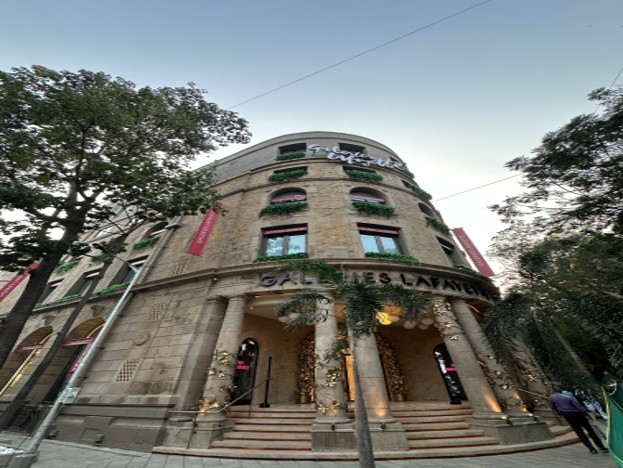
Galeries Lafayette Mumbai
Galeries Lafayette Mumbai
What: Galeries Lafayette Mumbai represents the iconic French department store's first major entry into the Indian luxury market. Located in the historic district of South Mumbai, the store is housed across two heritage buildings, including the former Philips Antiques building, which have been meticulously restored and connected. This flagship brings a distinct Parisian flair to India, offering a curated selection of international luxury houses alongside celebrated Indian designers.
Why it is important: The opening of Galeries Lafayette in Mumbai is a strategic milestone that highlights the growing importance of India as a global luxury destination. It demonstrates a sophisticated localization strategy where the "Art de Vivre" of Paris is adapted to the vibrant cultural context of Mumbai.
The store's importance lies in its architectural dialogue between neo-classical European styles and Indian heritage, creating a unique backdrop for premium retail. By offering exclusive services such as personal shopping and high-end gastronomy, Galeries Lafayette aims to redefine the luxury landscape in India. This project showcases how international retail leaders are investing in heritage preservation and local partnerships to build strong, culturally resonant brand identities in emerging markets.
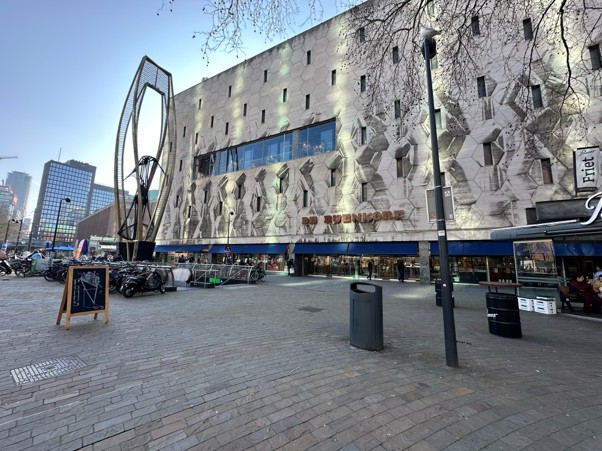
De Bijenkorf Rotterdam
De Bijenkorf Rotterdam
What: De Bijenkorf Rotterdam is a flagship store located in the heart of the city, recognized as a historical and architectural landmark. Rebuilt after World War II, the store was designed by the architect Marcel Breuer and is a prime example of modernist architecture. The presentation highlights the store's evolution and its role as a premier destination for luxury shopping in the Netherlands.
Why it is important: This visit illustrates the successful integration of a heritage-protected architectural icon with a contemporary, high-end retail strategy. De Bijenkorf has navigated the challenges of a rigid structural layout by creating open, light-filled spaces that emphasize a premium customer journey.
The store's significance lies in its "premium experience" model, which combines exclusive luxury brands with a strong focus on sustainability and local community engagement. It features a diverse range of departments, from high-end fashion and beauty to home and gastronomy, all unified by a consistent elevated aesthetic. The focus is on creating an inspiring environment where retail meets culture, utilizing the building's unique Brutalist character to differentiate itself in the European market.

Hyundai Department Store Apgujeong
Hyundai Department Store Apgujeong
What: Hyundai Department Store Apgujeong, Seoul's first Hyundai flagship opened in 1985, was visited by IADS member CEOs during the Mid-year meeting in June 2025 — generating more questions than any other stop on the tour. The pic report is ready for you, enjoy!
Why it is important: This visit offers a rare window into the operating logic of Korean premium retail, where VIC economics are not a niche strategy but a market-wide system. With ultra-high spend thresholds, hard benefits and cross-partner reciprocity built into every major chain, Korea has quietly developed the world's most sophisticated VIC architecture — and Hyundai Apgujeong, small but razor-sharp, is its clearest illustration.
The 33,000-square-metre store spans six floors across B2 to 4F, housing a curated mix of approximately 60 top luxury brands on the ground and first floors — including Chanel, Hermès, Louis Vuitton and Cartier — alongside a 6,750 sqm premium food hall renovated in 2023 ("Gastro Table"), a boutique cultural space (CH 1985), and dedicated VIC lounges extending to a rooftop garden with a private Atelier bar. Despite its modest footprint by Seoul standards, the store has exceeded KRW 1 trillion in annual sales every year since 2021, reaching KRW 1.2 trillion (€0.75bn) in 2024 — ranking 7th in Korea. The secret lies not in the lounges themselves, but in the operating system behind them: priority allocation of constrained luxury SKUs, appointment-based clienteling, and reciprocity platforms extending benefits abroad through partners such as Hankuku. At Apgujeong, qualifying for Jasmin status requires €42,000 in annual spend; Jasmin Black demands €94,000 — and in Korea, that bar is not exceptional. It is standard.
Check out the photos of Hyundai Department Store Apgujeong
Tech Insights
Partner Exclusive: How to build an effective client retention strategy
Partner Exclusive: How to build an effective client retention strategy
While many new customers may visit a department store during peak season, they might not become loyal clients right away. Many retailers wonder how to apply concrete methods to build meaningful relationships with customers and encourage them to return after peak season. This article offers a few tips to help convert new shoppers into long-term customers through scalable and tested engagement and loyalty techniques, ensuring sustained growth even during slower periods.
Building a seamless omnichannel strategy
During the low season, tracking sales and interactions without any blind spots becomes crucial in determining the effectiveness of specific operations. It also allows retailers to react quickly with targeted campaigns when certain strategies are not successful.
Many department stores face common challenges in tracking sales and communications across different departments and branches. Managing various divisions that cannot access each other's data can become a major obstacle to delivering a great customer experience and achieving growth.
This is why more and more department stores are implementing omnichannel solutions that:
- Track customer behaviour
- Measure the effectiveness of store operations
- Monitor inventory
- Facilitate data transmission between stores and branches
Implementing an omnichannel platform is a crucial first step in building an effective engagement strategy. It streamlines operations, enables data-sharing between branches, aligns different teams to work seamlessly toward results-drivengoals, and, most importantly, ensures consistent client services across all locations.
Anticipating customers' needs and wants
Once an omnichannel strategy is in place, one of the most valuable data points to record is individual customer information. This allows retailers to personalise their offerings and anticipate customer needs.
Personalisation is one of the most significant factors in enhancing client engagement. However, the challenge for most retailers is that personalising their offerings requires understanding individual customer preferences with a scalable method. They must also ensure this information is shared across branches and stores.
One effective solution is creating detailed customer profiles. By storing key client information—such as past interactions with sales representatives, purchase history, brand preferences, and average spending—retailers can better tailor their services to meet individual needs.
On a practical level, sales associates should have easy access to this information to deliver highly personalised recommendations during one-on-one interactions. Not only does this enhance the customer experience, but it also boosts employee confidence by removing the guesswork from the sales process.
Customer engagement is proportional to sales associates' engagement
Sales associates are the face of their company. Giving them more opportunities to engage with clients and rewarding them for doing so successfully is crucial for any retailer's growth. According to the Bureau of Labor Statistics, U.S. retail organisations experience an average employee turnover rate of 60%. High turnover is problematic for retailers, as
studies show that customers are 77% more likely to purchase a product when they trust the person recommending it. In this sense, customer engagement is directly linked to associate engagement and trust.
Empowering sales associates to take ownership of their roles as local experts and even micro-influencers has proven effective, especially when combined with an omnichannel strategy and a highly targeted, personalized approach. More companies are investing in solutions that provide sales associates with opportunities to engage through recommendation pages, social media, appointment scheduling, and direct communication with shoppers outside the store. By increasing touchpoints with customers, retailers can deliver high-quality service while also motivating sales associates to build lasting one-on-one relationships. Tracking successful interactions and rewarding individuals for their engagement has also been shown to boost associate morale and performance.
Building a scalable communication strategy
Nourishing 1-1 relationships with customers is essential to build loyalty, but how can department stores also grow customer engagement through a repeatable and scalable methodology?
It has been demonstrated that personalized interactions and recurring positive engagements drive customer loyalty.
Many retailers have found success by implementing the 3-3-3 or 2-2-2 strategy.
What is the 2-2-2 strategy?
The 2-2-2 strategy in retail communication is a structured approach designed to maintain consistent, personalised follow-ups with customers after a sale or interaction. It nurtures customer relationships and enhances loyalty, proving highly successful within various client bases.
Example:
- 2 days after the sale: Send a thank-you message and offer assistance if needed.
- 2 weeks after the sale: Follow up to ensure the product meets expectations and suggest complementary products based on the initial purchase or recent browsing history.
- 2 months after the sale: Reconnect with the customer to share updates on new arrivals, promotions, or loyalty programs.
The shift from manual to automated processes offers several benefits. Associates no longer need to spend valuable time identifying which customers to contact or tracking down past purchase details. This efficiency allows them to focus on high-value interactions, increasing productivity and optimising clienteling efforts.
Delivering the in-store experience online with AI
E-commerce has become a crucial aspect of the customer buying experience and changed shoppers' habits by providing round-the-clock shopping accessibility. With this new reality, providing personalised responses at any time of the day is becoming an expectation for customers.
While AI cannot replace human recommendations on an emotional level, it can bridge the gap by offering off-hours support and relevant product suggestions when a sales associate is unavailable. AI technology is increasingly tailored to specific retail use cases, making it an essential tool for retailers to consider.
In today's highly competitive market, incorporating AI has become a crucial part in implementing an effective customer engagement journey. A well-designed conversational AI becomes stronger and smarter over time, because it can be trained from your own retail intelligence, allowing it to deliver autonomous, human-like interactions, enhancing the shopping experience. Leveraging years of customer and associate interactions, AI-powered solutions can assist shoppers with visual browsing and personalised product recommendations. Advanced systems also integrate seamlessly with inventory, ensuring only available products are suggested. Additionally, retail-specific AI models can automate product tagging, identifying key features of new items to provide accurate and relevant recommendations during customer interactions.
Conclusion
The key to a successful client retention strategy lies in a retailer's ability to accurately understand their shoppers' needs and deliver personalised outreach. By incorporating automation, empowering sales associates, leveraging AI, and implementing a scalable engagement strategy, retailers can build a strong foundation for long-term success.
*Salesfloor stands as an award-winning clienteling and customer engagement platform, empowering retailers to foster meaningful conversations, drive recommendations, and boost sales. By offering innovative tools such as clienteling, virtual shopping, and conversational AI, Salesfloor enables seamless customer engagement across all channels.
Trusted by over 50,000 associates from leading retailers in apparel, beauty, jewelry, and beyond, Salesfloor is redefining the role of store associates in the modern retail landscape. Renowned brands such as Saks Fifth Avenue, Bloomingdale's, and Chico's rely on Salesfloor to achieve measurable results, including higher online conversion rates, larger basket sizes, and reduced return rates.*
Learn more about Salesfloor here
Protecting Customer Trust: The Role of Cybersecurity in Retail
Protecting Customer Trust: The Role of Cybersecurity in Retail
In the competitive world of retail, fostering strong customer trust is no longer a nicety, it's a necessity. Consumers entrust department stores with sensitive personal and financial information, making a secure shopping experience an absolute priority. However, the digital age has introduced a multitude of sophisticated cyber threats. From large-scale data breaches to targeted phishing scams, retailers face a constant uphill battle to safeguard customer information. This is where robust cybersecurity becomes the linchpin. By implementing strong data security measures, department stores can build customer confidence, cultivate lasting loyalty, and ensure a safe and secure shopping experience for all.
Unfortunately, the consequences of failing to prioritize cybersecurity can be severe. Data breaches, which occur when sensitive information like customer names, payment details, or addresses are compromised, can have a devastating impact on retailers. The financial repercussions are significant, with potential costs including hefty regulatory fines, expensive credit card fraud mitigation efforts, and a decline in sales due to customer churn.
Even more damaging, however, is the erosion of customer trust that follows a data breach. When consumers learn their personal information has been exposed, they may feel vulnerable and question the retailer's commitment to data security. This loss of trust can translate into a significant shift in shopping habits, with customers taking their business elsewhere and potentially sharing their negative experiences with others, further damaging the retailer's reputation.
Fortunately, there's a powerful tool at retailers' disposal to combat cyber threats and build customer confidence: cybersecurity. Cybersecurity encompasses a range of practices and technologies designed to safeguard data and information systems from unauthorized access, use, disclosure, disruption, modification, or destruction. By implementing robust cybersecurity measures, department stores can demonstrate their commitment to protecting customer information. This includes essential steps like data encryption, which scrambles sensitive data to render it unreadable in the event of a breach. Secure payment gateways further fortify the checkout process, ensuring customer financial information remains protected during transactions. Additionally, employee training plays a crucial role. Educating staff on cybersecurity best practices, including identifying phishing attempts and proper data handling procedures, strengthens the overall security posture. These proactive measures not only safeguard sensitive information but also send a clear message to customers: their trust and security are paramount. This commitment to data security fosters customer confidence, encourages continued patronage, and ultimately strengthens the department store's competitive edge.
However, building trust goes beyond just implementing strong cybersecurity measures. Transparency is equally important. Customers should also understand that a retailer is taking active steps to make sure their information is protected. Retailers can achieve this transparency by clearly communicating their cybersecurity practices. This includes readily available data privacy statements that outline how customer information is collected, used, and secured. Additionally, pursuing recognized security certifications demonstrates a department store's commitment to meeting rigorous industry standards for data protection. By maintaining clear and open communication about data security, retailers can address customer concerns, build trust, and foster a sense of security that keeps them coming back for a positive shopping experience.
By prioritizing robust cybersecurity and open communication, department stores can ensure a secure and trustworthy shopping experience for all. IADS has a partnership with the Retail & Hospitality Information Sharing and Analysis Center (RH-ISAC) to provide cybersecurity resources for all IADS members. To learn more, visit rhisac.org/IADS.
Partner Exclusive: Elevating Customer Experience through Employee Experiences in Department Stores
Partner Exclusive: Elevating Customer Experience through Employee Experiences in Department Stores
Over the last decade, department stores – once shining beacons of commerce and consumer culture – have found themselves increasingly under pressure. From the impact of the pandemic to the relentless rise of eCommerce, deepening labour shortages, and shifting shopper preferences, these venerable institutions are realising that they must adapt, or risk fading into irrelevance. Just look at Macy's – a retail icon that grew at an incredible rate in the early 2000s, now confronting mass closures to stave off the creeping threat of unproductiveness.
Set against this challenge, a new vision is emerging – one that views digitalization not as a threat, but as an opportunity to redefine the department store experience for a new omnichannel era. Around the world, forward-thinking retailers are leveraging innovative strategies and technologies to streamline operations, engage employees, and delight customers in ways that online commerce simply cannot match.
Why customers pick department stores in the eCommerce era
Department stores have a unique ability to turn shopping into a fun, social experience. They are vibrant hubs of activity with new collections and sales, especially during festive seasons, and deliver the experiential retail that customers crave. The presence of helpful and knowledgeable sales associates elevates this experience, providing the all-important human touch while facilitating easy, consumer-friendly policies. Great customer service is crucial not only for attracting shoppers to stores, but also for encouraging them to spend more –according to Alice POS, 42% of Americans will stop shopping with a brand after just two bad experiences, while 52% of consumers say they have made an additional purchase from a company after receiving positive customer service.
To deliver on the promise of experiential shopping, department stores must empower and motivate the people who bring in-person shopping to life: their frontline employees. Retail executives that invest in their customer-facing staff, providing them with the knowledge, skills, and support they need to excel, are better positioned to create the kind of personalised, memorable experiences that keep customers coming back time and time again.
Frontline tech delivers an outstanding shopper experience
This people-centric approach is exemplified by the partnership between Central and Robinson Department Stores (CDS), one of Thailand's largest department store chains, and YOOBIC, a virtual employee engagement platform designed for frontline teams. In 2020, CDS announced plans to merge the processes and support teams from its Central and Robinson brands to offer shoppers an unrivalled brick-and-mortar retail experience. The ambition was big – to create Thailand's first truly omnichannel department store – but so too were the hurdles: fragmented communication, inconsistent task execution, and a lack of accountability and visibility into store performance.
To overcome these obstacles, CDS turned to YOOBIC. Thanks to the platform's targeted, role-based communication tools, the retailer is now able to ensure the right operational information reaches the right employees at the right time, fostering greater consistency and compliance across its locations, like Visual Merchandising updates. YOOBIC's task management features provide Central Retail's leadership with real-time visibility into store execution, enabling them to track key performance indicators and hold teams accountable for results.
The benefits of the partnership extended far beyond operational efficiency, however. By creating digital communities within each of its 77 stores, CDS has fostered a greater sense of connection and belonging among its 4,000-strong frontline workforce. The platform's mobile-first learning and development system has also opened the door to bite-sized, on the-go training, empowering team members with the knowledge and skills needed to deliver exceptional customer experiences.
CDS's commitment to employee development is exemplified by their upcoming relaunch of training programs, which will offer regular incentives for top performers during the initial months, supported by in-person field coach teams who'll promote a blended digital and face to-face learning approach. The workforce's enthusiasm for professional development and digitised workflows is already evident in the impressive 85% Weekly Active Users (WAU) on the YOOBIC platform, sustained over the past 5 months, and the creation of 400,000 missions in the last year, which have had an impressive 87% completion rate. Effective employee training and development has also been crucial for attracting and retaining talent –according to a YOOBIC survey, 49% of frontline workers don't think that onboarding prepared them well for their jobs, while 64% want opportunities for career growth within the organisation.
Tapping into employees' creativity and passion
The lessons of YOOBIC and CDS's collaboration highlight the transformative impact of structured operational communication for store teams, moving beyond basic tools like emails, Whatsapp, or Line to a unified and intuitive communications platform. YOOBIC has not only enabled seamless communication among store staff, however, but has also provided a direct channel for the C-Suite to engage with frontline workers. This direct contact allows senior management to share their vision, provide guidance, and gain valuable insights from the employees who interact with customers daily. Throughout Southeast Asia – and indeed across the globe – department stores are waking up to the fact that their most valuable asset is their people. By giving frontline workers a voice, a sense of purpose, and the tools to succeed through advanced communication strategies, retailers can tap into a wellspring of creativity, passion, and customer-centricity that no eCommerce algorithm can replicate.
Of course, this transformation is not without its challenges. Shifting long-standing practices, investing in new technologies, and fostering a culture of continuous learning and innovation requires vision, commitment, and resources. But for department stores that get it right, the rewards are immense – not just in terms of sales and market share, but in the creation of a more vibrant, engaging, and human-focused retail landscape.Today, CDS enjoys a more knowledgeable and empowered workforce, better equipped to deliver personalised and exceptional shopping experiences. The sense of community and purpose fostered among the company's employees is a huge part of this, not only improving job satisfaction and retention, but also promising a positive impact on customer loyalty and sales.
As CDS continues to invest in its teams and technology, it sets a powerful example for others seeking to thrive in an increasingly competitive and digital world. The success of the brand's partnership with YOOBIC demonstrates that by prioritising the human element in retail, department stores can create a more resilient, adaptable, and profitable future.So, to department store leaders around the world, the message is clear: embrace the power of your people, and let digitalization be the catalyst for a retail renaissance that will stand the test of time. The future of your industry – and the hearts and minds of your customers – depends on it.

Fabrice Haiat - CEO & Co- founder / YOOBIC
YOOBIC is the #1 frontline digital workplace, dedicated to addressing frontline teams' challenges. The platform provides communication, learning and development, operations, and HR teams with the app they need to drive operational excellence while drastically improving the frontline employee working experience.
YOOBIC was founded in 2014 by 3 brothers, Fabrice, Avi and Gilles Haïat. Together they created a unique digital workplace that helps businesses empower their frontline teams for success, wherever they are, through effective communication, mobile learning and, digitized task management - all in one place.
Digital luxury: Brands navigating the intersection of technology and high-end fashion
Digital luxury: Brands navigating the intersection of technology and high-end fashion
At the forefront of luxury retail, the convergence of technology and high-end fashion is redefining elegance and sophistication. In this digital era, luxury brands are leveraging innovative technologies to enhance the customer experience and stay ahead of evolving trends. From immersive virtual boutiques and augmented reality try-on experiences to blockchain authentication and personalized AI-driven recommendations, the fusion of technology and luxury fashion is creating unparalleled levels of engagement and exclusivity. Digital fashion shows offer global audiences unprecedented access to high-fashion runway events, while interactive experiences blur the lines between the physical and virtual worlds. As luxury brands navigate this intersection of technology and fashion, they are reshaping the retail landscape and redefining the standards of opulence and innovation.
Retail Hub, our partner dedicated to innovation, is constantly monitoring potential start-ups for IADS' members, including the latest brands bridging the gap between technological innovation and luxury fashion. Explore the initiatives of startups selected by the Retail Hub such as Beyond The Runway, Fringuant, and Emperia, BuyBuddy pioneering solutions to navigating the intersection of technology and high-end fashion and more by clicking below.
Cybersecurity
Inside the account fraud economy: Q1 2026 benchmarks for retail
Inside the account fraud economy: Q1 2026 benchmarks for retail
What: Organised fraud groups are increasingly targeting retail accounts and loyalty programmes with advanced verification bypass and synthetic identity techniques, driving a surge in account takeovers and bot-driven attacks.
Why it is important: This escalation reflects a broader industry shift toward more targeted, sophisticated fraud, requiring retailers to strengthen layered defenses and real-time monitoring.
The Q1 2026 RH-ISAC benchmarks reveal a significant transformation in the account fraud landscape, with organized criminal groups leveraging advanced verification bypass and synthetic identity techniques to exploit retail, QSR, airline, and accommodation accounts. Retailers are now facing a surge in account takeovers, loyalty program abuse, and bot-driven attacks, particularly around high-demand products. The professionalisation of fraud services, including KYC and 2FA bypass, has made it increasingly difficult for traditional security measures to keep pace. Macroeconomic pressures, such as inflation and geopolitical instability, have further increased the value of stored credits and loyalty points, making them prime targets for sophisticated fraudsters. As legal and regulatory frameworks struggle to keep up with rapid technological advances, retailers are compelled to implement their own adaptive security strategies, focusing on layered defences, real-time intelligence sharing, and cross-functional collaboration to protect customer trust and business continuity.
IADS Notes: The Q1 2026 RH-ISAC findings align with recent industry reports, such as the May 2026 Retail Dive analysis documenting a shift toward targeted account takeovers and the March 2026 RH-ISAC emphasis on integrating cybersecurity with fraud prevention. The June 2025 Sainsbury’s loyalty programme breach illustrates the vulnerability of digital assets, while the March 2026 and April 2026 articles highlight how rapid AI adoption is outpacing security measures, exposing retailers to new risks. These developments collectively underscore the urgent need for adaptive, layered security and real-time monitoring to sustain customer trust and operational resilience.
Inside the account fraud economy: Q1 2026 benchmarks for retail
The missing security layer in agentic AI in retail
The missing security layer in agentic AI in retail
What: The rise of autonomous AI agents in retail is exposing the sector to novel cybersecurity risks that traditional frameworks cannot address.
Why it is important: Addressing these risks is critical for maintaining consumer trust and regulatory compliance in an increasingly digital retail environment.
The integration of agentic AI systems in retail is accelerating, promising significant operational efficiencies and new forms of customer engagement. However, this rapid technological shift is introducing a new class of cybersecurity risks that existing security frameworks are ill-equipped to manage. Autonomous AI agents, capable of making independent decisions and interacting with sensitive data, create vulnerabilities similar to those exploited by malware, increasing the potential for data breaches and system manipulation. As retailers embrace these advanced digital operators, the absence of tailored security protocols heightens the risk of regulatory non-compliance and erodes consumer trust. The sector faces mounting pressure to develop adaptive governance structures and real-time monitoring solutions that can address the unique challenges posed by agentic AI. Without robust security measures, the promise of AI-driven innovation in retail could be undermined by escalating threats, making it imperative for organisations to prioritise security as a foundational element of their digital transformation strategies.
IADS Notes: The rapid adoption of agentic AI in retail is fundamentally transforming operational efficiency and customer experience, but it is also exposing a widening gap between technological innovation and cybersecurity preparedness, as highlighted by RH-ISAC in March 2026. Autonomous AI agents now act in ways that closely resemble malware, introducing new risks that require real-time monitoring and robust governance, as detailed by Harvard Business Review in April 2026. Traditional security frameworks are proving inadequate, prompting urgent calls for new, tailored protocols to address the unique vulnerabilities of agentic AI, as emphasised by RH-ISAC in April 2026. Boards and executive leadership are under increasing pressure to strengthen oversight and ensure compliance with evolving regulations, given the escalating cyber threats from AI-driven innovation, as noted by Harvard Business Review in April 2026. The sector’s vulnerability is further underscored by The Robin Report in August 2025, which described how AI systems are susceptible to manipulation through prompt injection attacks, amplifying existing security risks and demanding a shift in how retailers approach digital risk management.
CISO Benchmark Report 2026
CISO Benchmark Report 2026
What: Retail CISOs are facing incremental budget growth, rising AI-driven risks, and expanding responsibilities amid persistent security maturity challenges.
Why it is important: The report’s insights confirm that budget constraints, skill shortages, and evolving threats are driving a strategic pivot toward intelligence sharing and robust incident response in retail.
The "CISO Benchmark 2026" report reveals that retail CISOs are navigating a landscape marked by modest increases in cybersecurity budgets, with spending growth often outpaced by the complexity and volume of threats. Artificial intelligence has emerged as both a critical tool and a significant risk, introducing new governance challenges and requiring fresh investment in oversight and controls. Despite technological advancements, staffing levels remain stable, with a focus on leveraging AI to enhance efficiency rather than reduce headcount. The role of the CISO has expanded beyond traditional IT security to encompass broader business risk domains, including third-party risk management, business continuity, and fraud prevention, reflecting the sector’s growing digital footprint and regulatory scrutiny. However, the maturity of security programs in retail continues to lag, with ongoing concerns about data leakage, insider threats, and insufficient controls. These persistent challenges underscore the need for integrated, resilient security strategies that can adapt to evolving threats and maintain consumer trust in an increasingly digital retail environment.
IADS Notes: The "CISO Benchmark 2026" report’s findings are strongly reinforced by recent industry analyses, which consistently highlight the escalating complexity and impact of cyber threats on the retail sector. The sharp rise in sophisticated attacks, as detailed in the March 2026 Unit 42 Global Incident Response Report, has made cybersecurity a core business risk, directly affecting profitability and customer trust. This urgency is echoed in the February 2026 Harvard Business Review, which documents the sector’s strategic shift toward collective resilience and industry-wide collaboration, moving beyond isolated prevention. The evolving responsibilities of CISOs, including the integration of fraud prevention and cybersecurity, are underscored by the March 2026 RH-ISAC article, reflecting the need for cross-functional coordination as digital transformation expands the attack surface. Intelligence sharing and collaborative engagement, as described in the January 2026 RH-ISAC Intelligence Trends Summary, are now central to effective threat response and operational continuity. Persistent challenges such as budget constraints, skill shortages, and lagging security maturity, highlighted in the August 2025 Retail Bulletin and July 2025 CISO Benchmark Report, further validate the report’s emphasis on the necessity of robust, integrated security strategies to sustain growth and maintain consumer trust.
The speed gap: Why AI in retail and hospitality is outpacing security
The speed gap: Why AI in retail and hospitality is outpacing security
What: The speed of AI deployment in retail and hospitality is outstripping the development of effective cybersecurity, increasing operational risks.
Why it is important: The trend underscores the increasing risk of sophisticated cyber threats as retailers prioritise rapid AI adoption over robust security.
Retail and hospitality sectors are experiencing a surge in AI adoption, with organizations leveraging advanced technologies to enhance operational efficiency and customer engagement. However, this rapid technological progress is creating a significant gap between innovation and security, as cybersecurity measures struggle to keep pace with the speed of AI deployment. The resulting vulnerabilities expose retailers to new and evolving threats, including sophisticated cyber attacks and novel risks such as prompt injection. Despite the clear benefits of AI-driven innovation, only a small fraction of retailers have achieved mature digital security, leaving the majority susceptible to breaches that can compromise both operations and customer trust. This imbalance is forcing industry leaders to urgently reassess their digital strategies, emphasising the need for robust governance, transparency, and integrated security protocols. As the sector continues to evolve, the challenge remains to balance the pursuit of technological advancement with the imperative to protect sensitive data and maintain operational resilience.
IADS Notes: The rapid adoption of AI in retail and hospitality is fundamentally transforming operational efficiency and customer experience, but it is also exposing a widening gap between technological innovation and cybersecurity readiness. As highlighted by RH-ISAC in March 2026, retailers are deploying AI at unprecedented speed, yet security protocols are struggling to keep pace, creating new vulnerabilities and operational risks. The Bain & Company Technology Report from September 2025 underscores that while 87% of AI-adopting retailers have seen revenue growth, only 18% possess mature digital core security, leaving the sector exposed to high-profile breaches. The Robin Report in August 2025 details how AI integration introduces novel threats such as prompt injection attacks, amplifying existing risks and demanding robust governance. The Financial Times in November 2025 emphasises that the explosive growth of AI-driven commerce is forcing retailers to recalibrate digital strategies and urgently address transparency and responsible governance. Meanwhile, The Retail Bulletin in August 2025 reports a surge in sophisticated cyber threats, with ransomware accounting for 30% of incidents and only a minority of retailers equipped with adequate security, highlighting the urgent need for integrated, proactive security strategies to sustain growth and customer trust.
The speed gap: Why AI in retail and hospitality is outpacing security
The speed gap: Why AI in retail and hospitality is outpacing security
Department Stores
Beymen Tersane
Beymen Tersane
What: Beymen Tersane, located in Istanbul, is presented by the IADS (International Association of Department Stores) as a unique expert platform in the world of department stores. This presentation showcases a high-end retail space divided into 8 galleries (represented by the "G" prefix in the report) to guide the user through a curated luxury experience
Why is it important: This visit offers a window into a sophisticated retail model where historical industrial architecture meets modern luxury clienteling. The store is situated in a restored shipyard area, utilizing monumental stone arches, exposed brickwork, and vaulted ceilings to create a dramatic shopping environment that integrates heritage with high-end commerce.
The store's significance lies in its gallery-based operating system which segments the 33,000-square-metre logic into distinct zones. It houses a curated mix of top luxury brands, including dedicated sections for Alaïa, Bottega Veneta, Maison Margiela, and Chanel. Large-scale suspended art installations and the G9 Contemporary Gallery merge the shopping experience with cultural exploration. Furthermore, the G5 Beauty Gallery and Beymen Beauty Studio offer specialized services alongside premium brands like Xerjoff. The use of premium materials, such as veined marble pedestals and metallic spiral staircases, reinforces the store's premium positioning across all levels.
Galeries Lafayette Mumbai
Galeries Lafayette Mumbai
What: Galeries Lafayette Mumbai represents the iconic French department store's first major entry into the Indian luxury market. Located in the historic district of South Mumbai, the store is housed across two heritage buildings, including the former Philips Antiques building, which have been meticulously restored and connected. This flagship brings a distinct Parisian flair to India, offering a curated selection of international luxury houses alongside celebrated Indian designers.
Why it is important: The opening of Galeries Lafayette in Mumbai is a strategic milestone that highlights the growing importance of India as a global luxury destination. It demonstrates a sophisticated localization strategy where the "Art de Vivre" of Paris is adapted to the vibrant cultural context of Mumbai.
The store's importance lies in its architectural dialogue between neo-classical European styles and Indian heritage, creating a unique backdrop for premium retail. By offering exclusive services such as personal shopping and high-end gastronomy, Galeries Lafayette aims to redefine the luxury landscape in India. This project showcases how international retail leaders are investing in heritage preservation and local partnerships to build strong, culturally resonant brand identities in emerging markets.
De Bijenkorf Rotterdam
De Bijenkorf Rotterdam
What: De Bijenkorf Rotterdam is a flagship store located in the heart of the city, recognized as a historical and architectural landmark. Rebuilt after World War II, the store was designed by the architect Marcel Breuer and is a prime example of modernist architecture. The presentation highlights the store's evolution and its role as a premier destination for luxury shopping in the Netherlands.
Why it is important: This visit illustrates the successful integration of a heritage-protected architectural icon with a contemporary, high-end retail strategy. De Bijenkorf has navigated the challenges of a rigid structural layout by creating open, light-filled spaces that emphasize a premium customer journey.
The store's significance lies in its "premium experience" model, which combines exclusive luxury brands with a strong focus on sustainability and local community engagement. It features a diverse range of departments, from high-end fashion and beauty to home and gastronomy, all unified by a consistent elevated aesthetic. The focus is on creating an inspiring environment where retail meets culture, utilizing the building's unique Brutalist character to differentiate itself in the European market.
Hyundai Department Store Apgujeong
Hyundai Department Store Apgujeong
What: Hyundai Department Store Apgujeong, Seoul's first Hyundai flagship opened in 1985, was visited by IADS member CEOs during the Mid-year meeting in June 2025 — generating more questions than any other stop on the tour. The pic report is ready for you, enjoy!
Why it is important: This visit offers a rare window into the operating logic of Korean premium retail, where VIC economics are not a niche strategy but a market-wide system. With ultra-high spend thresholds, hard benefits and cross-partner reciprocity built into every major chain, Korea has quietly developed the world's most sophisticated VIC architecture — and Hyundai Apgujeong, small but razor-sharp, is its clearest illustration.
The 33,000-square-metre store spans six floors across B2 to 4F, housing a curated mix of approximately 60 top luxury brands on the ground and first floors — including Chanel, Hermès, Louis Vuitton and Cartier — alongside a 6,750 sqm premium food hall renovated in 2023 ("Gastro Table"), a boutique cultural space (CH 1985), and dedicated VIC lounges extending to a rooftop garden with a private Atelier bar. Despite its modest footprint by Seoul standards, the store has exceeded KRW 1 trillion in annual sales every year since 2021, reaching KRW 1.2 trillion (€0.75bn) in 2024 — ranking 7th in Korea. The secret lies not in the lounges themselves, but in the operating system behind them: priority allocation of constrained luxury SKUs, appointment-based clienteling, and reciprocity platforms extending benefits abroad through partners such as Hankuku. At Apgujeong, qualifying for Jasmin status requires €42,000 in annual spend; Jasmin Black demands €94,000 — and in Korea, that bar is not exceptional. It is standard.
Check out the photos of Hyundai Department Store Apgujeong